Sunday, June 11, 2023
Good and Evil
Seneca, Letters to Lucilius 31.6 (tr. Richard M. Gummere):
What then is good? The knowledge of things. What is evil? The lack of knowledge of things.
quid ergo est bonum? rerum scientia. quid malum est? rerum imperitia.
Saturday, June 10, 2023
Appearance and Reality
Astydamas II, fragment 1c (from Alcmaeon; tr. M.J. Cropp):
I care not for seeming but for truth.Thomas Sims, A Commentary on the Fragments of Fourth-Century Tragedy (Thesis, University of Nottingham, 2018), p. 83:
οὐ τοῦ δοκεῖν μοι, τῆς δ' ἀληθείας μέλει.
οὐ Gaisford: ὁ codd.
For the value of truth over appearing good cf. οὐ γὰρ δοκεῖν ἄριστος, ἀλλ' εἶναι θέλει ('for he does not wish to seem the best, but to be the best', Aesch. Sept. 592, spoken about Alcmeon's father Amphiaraus), Ag. 788–9, Eur. Telephus fr. 698, Phoenix fr. 809 TrGF.Cf. Cicero, On Friendship 98:
virtute enim ipsa non tam multi praediti esse quam videri volunt.and Sallust, The War with Catiline 54.6 (on Cato):
esse quam videri bonus malebat.
Conjectural Emendation
Norman Page, A.E. Housman: A Critical Biography (1983; rpt. London: Palgrave Macmillan, 1996), p. 146 (quoting from Housman's Notebooks):
Conjectural emendation as practised by —— is not a game, an exercise requiring skill and heed, like marbles or skittles or cat's-cradle, but a pastime, like leaning against a wall and spitting.Id.:
My favourite work of fiction, the Latin dictionary.
More on Porson's Powers of Memory
John Selby Watson, The Life of Richard Porson, M.A.: Professor of Greek in the University of Cambridge from 1792 to 1808 (London: Longman, Green, Longman, and Roberts, 1861), pp. 295-296, 298 (notes omitted):
On one occasion, when Porson, Reed, and some other of the literati, with John Kemble, were assembled at Dr. Burney's at Hammersmith, and were examining some old newspapers in which the execution of Charles I. was detailed, they observed some particulars stated in them which they doubted whether Hume or Rapin had mentioned. Reed, who, being versed in old literature, was consulted as the oracle on the point, could not recollect; but Porson repeated a long passage from Rapin in which the circumstances were fully noticed. Archdeacon Burney, who favoured me with this anecdote, told me, at the same time, that he had often, when a boy, taken down Humphry Clinker, or Foote's plays, from his father's shelves, and heard Porson repeat whole pages of them walking about the room.Cicero, De Oratore 2.74.229-300 (tr. E.W. Sutton and H. Rackham):
Basil Montague related that Porson, in his presence, and that of some other persons, read a page or two of a book, and then repeated what he had read from memory. "That is very well," said one of the company, “but could the Professor repeat it backwards?" Porson immediately began to repeat it backwards, and failed only in two words.
Priestley, the bookseller, used to relate that Porson was once in his shop, when a gentleman came in, and asked for a particular edition of Demosthenes, of which Priestley was not in possession. The gentleman being somewhat disappointed, Porson, whose attention was directed towards him, asked him whether he wished to consult any passage in Demosthenes. The gentleman replied in the affirmative, and specified the passage. Porson then asked Priestley for a copy of the Aldine edition, and, having received it, and turned over a few leaves, put his finger on the passage, "showing," said Priestley, "not only his knowledge of the author, but his familiarity with the position of the passage in that particular edition."
A similar anecdote used to be told by Mr. Cogan. One day Porson called on a friend who happened to be reading Thucydides, and who asked leave to consult him on the meaning of a word. Porson, on hearing the word, did not look at the book, but at once repeated the passage. His friend asked how he knew that it was that passage. "Because," replied Porson, "the word occurs only twice in Thucydides, once on the right hand page, in the edition which you are using, and once on the left. I observed on which side you looked, and accordingly knew to which passage you referred."
[....]
A remark which he made to Mrs. Edwards, however, a friend of Dr. Parr's, intimates that he was quite conscious of the natural goodness of his memory. He told her that "his memory was a source of misery to him, as he could never forget anything, even what he wished not to remember." Themistocles is not the only one that has longed for the art of forgetting.
For instance, we are told that the famous Athenian Themistocles was endowed with wisdom and genius on a scale quite surpassing belief; and it is said that a certain learned and highly accomplished person went to him and offered to impart to him the science of mnemonics, which was then being introduced for the first time; and that when Themistocles asked what precise result that science was capable of achieving, the professor asserted that it would enable him to remember everything; and Themistocles replied that he would be doing him a greater kindness if he taught him to forget what he wanted than if he taught him to remember. Do you observe what mental force and penetration the man possessed, what power and range of intellect? inasmuch as his answer brings home to us that nothing that had once been introduced into his mind had ever been able to pass out of it, inasmuch as he would rather have been able to forget something that he did not wish to remember than to remember everything that he had once heard or seen.Related posts:
ita apud Graecos fertur incredibili quadam magnitudine consili atque ingeni Atheniensis ille fuisse Themistocles; ad quem quidam doctus homo atque in primis eruditus accessisse dicitur eique artem memoriae, quae tum primum proferebatur, pollicitus esse se traditurum; cum ille quaesisset quidnam illa ars efficere posset, dixisse illum doctorem, ut omnia meminisset; et ei Themistoclem respondisse gratius sibi illum esse facturum, si se oblivisci quae vellet quam si meminisse docuisset. videsne quae vis in homine acerrimi ingeni, quam potens et quanta mens fuerit? qui ita responderit, ut intellegere possemus nihil ex illius animo, quod semel esset infusum, umquam effluere potuisse; cum quidem ei fuerit optabilius oblivisci posse potius quod meminisse nollet quam quod semel audisset vidissetve meminisse.
A Strange Country
Richard West, letter to Thomas Gray (November 14, 1735):
Consider me very seriously here in a strange country, inhabited by things that call themselves Doctors and Masters of Arts; a country flowing with syllogisms and ale, where Horace and Virgil are equally unknown...Here = Christ Church, Oxford.
Friday, June 09, 2023
The Old Man
Adi Shankara, Bhaja Govindam 15 (stanza attributed to Hastamalaka; tr. Pavan K. Varma):
Feeble has grown the old man's body, toothless his gums and bald his head; but there he goes, upon his crutches, clinging firmly to fruitless hope!The same, tr. T.M.P. Mahadevan:
The body has become decrepit; the head has turned grey; the mouth has been rendered toothless; grasping a stick, the old man moves about. Even then, the mass of desires does not go.
A Prying Busybody
Minucius Felix, Octavius 10.5 (tr. Gerald H. Rendall):
And yet again what monstrous absurdities these Christians invent about this God of theirs, whom they can neither show nor see! that he searches diligently into the ways and deeds of all men, yea even their words and hidden thoughts, hurrying to and fro, ubiquitously; they make him out a troublesome, restless, shameless and interfering being, who has a hand in everything that is done, interlopes at every turn, and can neither attend to particulars because he is distracted with the whole, nor to the whole because he is engaged with particulars.
at etiam Christiani quanta monstra, quae portenta confingunt! deum illum suum, quem nec ostendere possunt nec videre, in omnium mores, actus omnium, verba denique et occultas cogitationes diligenter inquirere, discurrentem scilicet atque ubique praesentem: molestum illum volunt, inquietum, inpudenter etiam curiosum, siquidem adstat factis omnibus, locis omnibus intererrat, cum nec singulis inservire possit per universa districtus nec universis sufficere in singulis occupatus.
Censors
Dionysius of Halicarnassus, Roman Antiquities 20.13.2-3 (tr. Earnest Cary):
[2] The Athenians gained repute because they punished as harmful to the state the indolent and idle who followed no useful pursuits, and the Lacedaemonians because they permitted their oldest men to beat with their canes such of the citizens as were disorderly in any public place whatever; but for what took place in the homes they took no thought or precaution, holding that each man's house-door marked the boundary within which he was free to live as he pleased. [3] But the Romans, throwing open every house and extending the authority of the censors even to the bed-chamber, made that office the overseer and guardian of everything that took place in the homes; for they believed that neither a master should be cruel in the punishments meted out to his slaves, nor a father unduly harsh or lenient in the training of his children, nor a husband unjust in his partnership with his lawfully-wedded wife, nor children disobedient toward their aged parents, nor should own brothers strive for more than their equal share, and they thought there should be no banquets and revels lasting all night long, no wantonness and corrupting of youthful comrades, no neglect of the ancestral honours of sacrifices and funerals, nor any other of the things that are done contrary to propriety and the advantage of the state.
[2] Ἀθηναῖοι μὲν δόξης ἔτυχον ὅτι τοὺς ῥᾳθύμους καὶ ἀργοὺς καὶ μηδὲν ἐπιτηδεύοντας τῶν χρησίμων ὡς ἀδικοῦντας τὸ κοινὸν ἐζημίουν, Λακεδαιμόνιοι δέ ὅτι τοῖς πρεσβυτάτοις ἐπέτρεπον τοὺς ἀκοσμοῦντας τῶν πολιτῶν ἐν ὁτῳδήτινι τῶν δημοσίων τόπῳ ταῖς βακτηρίαις παίειν· τῶν δὲ κατ᾽ οἰκίαν γενομένων οὔτε πρόνοιαν οὔτε φυλακὴν ἐποιοῦντο, τὴν αὔλειον θύραν ἑκάστου ὅρον εἶναι τῆς ἐλευθερίας τοῦ βίου νομίζοντες. [3] Ῥωμαῖοι δὲ πᾶσαν ἀναπετάσαντες οἰκίαν καὶ μέχρι τοῦ δωματίου τὴν ἀρχὴν τῶν τιμητῶν προαγαγόντες ἁπάντων ἐποίησαν ἐπίσκοπον καὶ φύλακα τῶν ἐν αὐταῖς γινομένων, οὔτε δεσπότην οἰόμενοι δεῖν ὠμὸν εἶναι περὶ τὰς τιμωρίας οἰκετῶν οὔτε πατέρα πικρὸν ἢ μαλθακὸν πέρα τοῦ μετρίου περὶ τέκνων ἀγωγὰς οὔτε ἄνδρα περὶ κοινωνίαν γαμετῆς γυναικὸς ἄδικον οὔτε παῖδας γηραιῶν ἀπειθεῖς πατέρων οὔτε ἀδελφοὺς γνησίους τὸ πλεῖον ἀντὶ τοῦ ἴσου διώκοντας, οὐ συμπόσια καὶ μέθας παννυχίους, οὐκ ἀσελγείας καὶ φθορὰς ἡλικιωτῶν νέων, οὐχ ἱερῶν ἢ ταφῶν προγονικὰς τιμὰς ἐκλιπούσας, οὐκ ἄλλο τῶν παρὰ τὸ καθῆκον ἢ συμφέρον τῇ πόλει πραττομένων οὐδέν.
Thursday, June 08, 2023
Old Mastodons
Jenny Strauss Clay, Classical World 96.3 (Spring, 2003) 336, reviewing Homer, Iliad Book One. Edited with an Introduction, Translation, and Commentary by Simon Pulleyn (Oxford: Oxford University Press, 2000):
Generally, this constitutes an extremely attractive volume, but in my eyes it has a fatal flaw: the facing translation means that I cannot use this book in my classes. Clearly, Oxford University Press believes there is an audience (in Britain?) for this format (compare the Aris and Phillips editions); that speaks volumes about the teaching of ancient Greek. Have our British cousins given up? Perhaps the Press can be persuaded to issue an edition without English for us old mastodons who do not believe students will learn Greek with a translation at hand.Homer, Odyssey I. Edited with an Introduction, Translation, Commentary, and Glossary by Simon Pulleyn (Oxford: Oxford University Press, 2019), p. viii:
Some pedagogues will throw up their hands in horror at a comentator who also provides a translation. Their students, they say, will 'cheat' by looking at the translation before having wrestled sufficiently with the Greek. I credit readers with more maturity than this: it is perfectly open to them to put a piece of paper over the right-hand page and use the translation as a secondary check rather than a primary shortcut.
Utopia
G.K. Chesterton, "Our Note Book," The Illustrated London News (May 7, 1927), p. 802:
I am not at all fond of regimentation or repression; that is why I have never written a novel about Utopia, as is the case with almost all of the sinful human race who have written anything in our time. Utopia always seems to me to mean regimentation rather than emancipation; repression rather than expansion. It is generally called a Republic, and it always is a Monarchy. It is a Monarchy in the old and exact sense of the term; because it is really ruled by one man, the author of the book. He may tell us that all the characters in the book spontaneously delight in the beautiful social condition, but somehow we never believe him. His ideal world is always the world that he wants, and not the world that the world wants. Therefore, however democratic it may be in theory or in the book, it is always pretty despotic when it begins to be approached in practice through the law. The first modern moves towards any Utopian condition are generally as coercive as Prohibition. All that we call Utopia is but the rather evasive and vague expression of the natural, boyish, and romantic sentiment: "If I were King."
Gods
Homer, Iliad 1.17-21 (Chryses, priest of Apollo, speaking; tr. Peter Green):
Arthur Platt, "Notes on the Text of the Iliad," Journal of Philology 18 (1890) 126-133 (at 126-127, on 1.18):
Atreus's sons, and you other well-greaved Achaeans,G.S. Kirk on line 18:
may the gods who have their homes on Olympos grant you
to sack Priam's city, and win a safe homecoming!
But release my dear daughter, accept the ransom I offer,
show respect for Zeus's son, Apollo, the deadly archer.
Ἀτρεΐδαι τε καὶ ἄλλοι ἐϋκνήμιδες Ἀχαιοί,
ὑμῖν μὲν θεοὶ δοῖεν Ὀλύμπια δώματ᾿ ἔχοντες
ἐκπέρσαι Πριάμοιο πόλιν, εὖ δ᾿ οἴκαδ᾿ ἱκέσθαι·
παῖδα δ᾿ ἐμοὶ λύσαιτε φίλην, τὰ δ᾿ ἄποινα δέχεσθαι, 20
ἁζόμενοι Διὸς υἱὸν ἑκηβόλον Ἀπόλλωνα.
Out of 88 Iliadic and 94 Odyssean occurrences of θεοί in the nominative this is the only one in which it is scanned as a monosyllable by synizesis (though cf. θεοῖσιν at Od. 14.251). It is certain that the poets were capable of expressing this kind of simple thought without the use of such a rare pronunciation (it became commoner later) and the abandonment of such an extensive and strict formular system. Bentley's ὔμμι θεοὶ μὲν δοῖεν is the best emendation proposed so far, the postponement of μέν being unusual but not impossible.Simon Pulleyn on line 18:
θεοί Scanned as one syllable, the sounds ε and οι being run together in pronunciation; this is known as synizesis or synecphonesis. Out of a total of 182 occurrences of the nominative θεοί in Homer, this is the only one scanned as a monosyllable. In order to avoid this apparent anomaly, Bentley conjectured ὔμμι θεοὶ μὲν δοῖεν. Normally, one expects that the words which come immediately before μέν and δέ will be corresponding elements in a binary contrast; thus we would expect another nominative contrasted with θεοί doing something to or for the Greeks (ὔμμι). However, Homeric usage is not absolute on this point and more or less violent postponements of μέν are found (e.g. 13.13). Bentley's conjecture is thus not unattractive.Martin L. West's Teubner edition of the Iliad (1998) records no variants or conjectures for line 18 in the critical apparatus.
Arthur Platt, "Notes on the Text of the Iliad," Journal of Philology 18 (1890) 126-133 (at 126-127, on 1.18):
It is commonly objected to this line that the synizesis of θεοί in the oldest part of Homer is impossible: Bentley accordingly conjectures ὔμμι θεοὶ μὲν δοῖεν. But this reading puts the μὲν quite in the wrong place; if μὲν is to qualify the whole clause it ought to be the second word in it, and it does not make any sense to make it qualify θεοί. It the line is to be altered at all it would be better to read: ὑμῖν μὲν τοι δοῖεν, for it would not be un-Homeric to use Ὀλύμπια δώματ᾿ ἔχοντες by itself for the gods, and this reading is such as might give rise to corruption and our text. I believe that it is a safe rule in Homeric criticism that the order of words is not to be meddled with except under pressing necessity, that the freer uncontracted forms of Homeric words have been everywhere cut down without remorse but that the words themselves have been preserved with most extraordinary fidelity. You can hardly read half a dozen lines of Homer without coming across forms of words which ought to be restored to an older form, but you may read all Homer through and scarcely come across a dozen lines where any plausible emendation has been made which alters the order of the words or the words themselves1.Other conjectures include ὑμῖν μὲν δοῖεν πότ' (Nauck), ἀλλ' ὔμμι μὲν δοῖεν (Fick), δοῖεν μὲν θεοὶ ὔμμιν (Brandreth).
Now there is another place in Homer where the short form of θεοῖσι occurs, ξ.251. It is true that the Odyssey has many more short and contracted forms of words than the oldest part of the Iliad. But if θεοῖσι is contracted once and once only in the former, why not also once in the latter? And ξ.251 is a line which defies emendation; the only way to get rid of it would be the rough method of downright expulsion. And why should there be any difficulty about it? Will the opponents of all contraction and synizesis in Homer consider this simple fact? Homer uses three forms of the same infinitive, τεuxέμεναι, τεύχεμεν and τεύχειν. He uses three forms of the same genitive, Φοίβοιο, Φοίβοο and Φοίβου. In the oldest parts therefore he uses the uncontracted forms and two stages of contraction, uses them perpetually and without the least hesitation, and no one will dare endeavour to remove them or to explain them away. And it would be easy for the merest beginner in Homeric science to add more cases of the same kind. Perhaps it would be as well to talk less about contracted forms and short forms of the dative plural and so forth, until some one shall have "corrected" the "un-Homeric contractions" of ἄγειν and τοῦ in A.338, 340. And if θύρεον in ι.340 can be scanned as an iambus, why not θεός as a monosyllable?
1 Cf. however on the other side Meurad [sic, read Menrad] de Contractionis Usu Homerico, p. 168. But most of his instances are puerile, and simply shew the weakness of his case.
Wednesday, June 07, 2023
Suos Cuique Mos
Critias, fragment 17 (tr. M.J. Cropp):
Our desires in life are of every kind. One man yearns to get nobility, another cares nothing for that but wants to be called the father of abundant possessions for his house. Another chooses to say nothing wholesome based on sound thinking and to entice his fellows with vile audacity; while others again prefer base gains to honorable achievement. That's how diversely men's ways of life range. But I for my part want to get none of these things, and would rather have the credit of good repute.Related posts:
ἔρωτες ἡµῖν εἰσὶ παντοῖοι βίου·
ὃ µὲν γὰρ εὐγένειαν ἱµείρει λαβεῖν,
τῷ δ' οὐχὶ τούτου φροντίς, ἀλλὰ χρηµάτων
πολλῶν κεκλῆσθαι βούλεται πατὴρ δόµοις·
ἄλλῳ δ' ἀρέσκει µηδὲν ὑγιὲς ἐκ φρενῶν 5
λέγοντι πείθειν τοὺς πέλας τόλµῃ κακῇ·
οἱ δ' αἰσχρὰ κέρδη πρόσθε τοῦ καλοῦ βροτῶν
ζητοῦσιν· οὕτω βίοτος ἀνθρώπων πλάνη.
ἐγὼ δὲ τούτων οὐδενὸς χρῄζω τυχεῖν,
δόξαν δὲ βουλοίµην ἂν εὐκλείας ἔχειν. 10
- Every Humour Hath His Adjunct Pleasure
- Suum Cuique
- Archilochus, Fragment 19 West
- Priamel (from the movie Johnny Guitar)
- Book Lovers
- A Priamel by Asclepiades
- Monday's Child Again?
- Different Strokes for Different Folks
- Attraction
- Priamel
A Man of Modest Means
Dionysius of Halicarnassus, Roman Antiquities 19.15.5-7 (Fabricius speaking; tr. Earnest Cary):
[5] When, now, though poor, I am at no disadvantage on that account in comparison with those who possess much, why in the world should I have denounced Fortune because she did not make me equal to you kings who have much gold treasured up? Nay, even in my private affairs I am so far removed from misfortune that I consider myself to be one of a favoured few of the blest, when I compare myself with the rich, and in this I take the greatest pride. [6] For my sorry little farm suffices to furnish me with the necessaries of life if I am industrious and frugal, and Nature does not compel me to seek more than is necessary; on the contrary, all food is pleasing to me which hunger prepares, every drink is sweet when thirst provides it, sleep is gentle when induced by fatigue, the clothing which keeps one from shivering is most adequate, and the cheapest utensil of all that can serve the same purposes is the most suitable. [7] Hence not even on this score should I be justified in denouncing Fortune, since she has given me as much substance as Nature wished me to have; as for things in excess of that, she has neither implanted in me any craving for them nor given me any store of them.
[5] ὁπότε δὲ πενόμενος οὐδὲν παρὰ τοῦτ᾽ ἔλαττον ἔχω τῶν πολλὰ κεκτημένων, τί παθὼν ἂν κατηγόρησα τῆς τύχης, ὅτι οὐχ ὑμῖν ἐξίσωσε τοῖς βασιλεῦσιν, οἷς ὁ πολὺς θησαυρίζεται χρυσός; ἀλλὰ μὴν ἔν γε τοῖς ἰδίοις τοσοῦτον ἀπέχω κακοδαιμονίας ὥστ᾽ ἐν ὀλίγοις πάνυ τῶν μακαρίων ἐμαυτὸν εἶναι δοκῶ παρὰ τοὺς πλουσίους ἐξετάζων, καὶ ἐπὶ τούτῳ μέγιστον φρονῶ· [6] ἐπειδὴ τὰ μὲν ἀναγκαῖα τὸ λυπρὸν ἀπόχρη μοι γήδιον φιλεργοῦντι καὶ ταμιευομένῳ παρέχειν, τὰ δ᾽ ἔξω τῶν ἀναγκαίων οὐ βιάζεται ζητεῖν ἡ φύσις, ἀλλὰ καὶ τροφὴ πᾶσα ἡδεῖά μοι ἣν ἂν ὁ λιμὸς σκευάσῃ, καὶ ποτὸν ἅπαν γλυκύ ὅταν ἡ δίψα πορίσῃ, καὶ ὕπνος μαλθακός ὅταν ἡγήσηται κόπος, ἐσθής τε ἡ παρέχουσα μὴ ῥιγοῦν αὐταρκεστάτη, καὶ σκεῦος ὅ τι ἂν εὐτελέστατον τῶν δυναμένων τὰς αὐτὰς παρέχειν χρείας οἰκειότατον. [7] ὥστ᾽ οὐδὲ κατὰ τοῦτο δίκαιος εἴην ἂν τῆς τύχης κατηγορεῖν, ἥ μοι τοσαύτην παρέσχεν οὐσίαν ὅσην ἡ φύσις ἐβούλετο ἔχειν· τῶν δ᾽ ὑπερβαλλόντων οὔτε πόθον ἐνέφυσεν οὔτ᾽ εὐπορίαν ἔδωκεν.
Negative Research
Simon Pulleyn, "A Linguistic Approach to Classics," Classics for All (1 Jun 2023):
Years of studying classical texts do not lead me to a position where I can relax in a warm glow of mastery. My day-to-day experience is chiefly one of puzzlement.
[....]
When I approach a line of Homer, I look at every single word. Quite often, I write a note on every single word. Then I delete quite a few of them. This is what I call 'negative research': one does a lot of reading, writes what one regards as an elegant distillation, then crosses it out because it does not seem worth foisting on others. The hope is that what remains might be useful.
Tuesday, June 06, 2023
The Pirate Party
Mychael Schnell et al., "Conservatives revolt against GOP leaders on House floor," The Hill (June 6, 2023):
 I assume that pirates is a misprint for parties, not a reference to the Pirate Party, which unfortunately has no seats in the House of Representatives.
The compromise bill infuriated the ideological fringes of both pirates...Image:

Labels: typographical and other errors
Bravado
Dionysius of Halicarnassus, Roman Antiquities 14.9.4 (tr. Earnest Cary):
For what harm can be done to men going into battle by those long locks, the fierceness of their glance, and the grim aspect of their countenances? And these awkward prancings, the useless brandishing of their weapons, the many clashings of their shields, and all the other demonstrations of barbarian and senseless bravado, whether through motions or through sounds, indulged in by way of threats to their foes—what advantage are they calculated to bring to those who attack unintelligently, or what fear to those who with cool calculation stand their ground in the midst of danger?ἐργάσασθαι with double accusative (as here) = do something to. A bit more literally, "What harm can those long locks, the fierceness of their glance, and the grim aspect of their countenances do to men going into battle?"
τί γὰρ ἂν δυνήσονται δεινὸν ἐργάσασθαι τοὺς ὁμόσε χωροῦντας αἱ βαθεῖαι κόμαι καὶ τὸ ἐν τοῖς ὄμμασιν αὐτῶν πικρὸν καὶ ὁ βλοσυρὸς τῆς ὄψεως χαρακτὴρ; αἵ τε δὴ πλημμελεῖς αὗται σκιρτήσεις καὶ τὰ διὰ κενῆς ἀνασείσματα τῶν ὅπλων καὶ οἱ πολλοὶ τῶν θυρεῶν κτύποι καὶ ὅσα ἄλλα ὑπὸ βαρβάρου καὶ ἄφρονος ἀλαζονείας κατά τε μορφὰς καὶ φωνὰς ἐν ἀπειλαῖς πολεμίων σπαθᾶται, τίνα παρέχειν πέφυκε τοῖς ἀνοήτως ἐπιοῦσι πλεονεξίαν ἢ τοῖς μετὰ λογισμοῦ παρὰ τὰ δεινὰ ἑστῶσι φόβον;
Cantaber
Ronald Syme, "Exotic Names, Notably in Seneca's Tragedies," in his Roman Papers, VI (Oxford: Clarendon Press, 1991), pp. 269-286 (at 279):
Differing predilections obtain, and different types of writing. The subjugation of north-western Spain was the prime military achievement that marked the first decade of the reign, celebrated by the closing of Janus for the second time. Caesar Augustus himself had taken the field against the Cantabrians in 26. Hence 'Cantaber' no fewer than six times in Horace—but nowhere in any other poet.Except for Lucan 6.259; Silius 3.326, 5.639, 9.232, 10.16, 15.413; Juvenal 15.108; etc.
Labels: typographical and other errors
Monday, June 05, 2023
Bad Pennies
Aristophanes, Frogs 718-737 (tr. Matthew Dillon):
Many times it seems to us the city has doneDouglas MacDowell, Aristophanes and Athens (Oxford: Oxford University Press, 1995), pp. 287-288:
the same thing with the best and the brightest of its citizens
as with the old coinage and the new gold currency.
For these, not counterfeit at all,
but the finest it seems of all coins,
and the only ones of the proper stamp, of resounding metal
amongst Greeks and foreigners everywhere,
we never use, but the inferior bronze ones instead,
minted just yesterday or the day before with the basest stamp.
So too the citizens whom we know to be noble and virtuous,
and righteous and true men of quality
and trained in the palaestra and dancing and music,
these we despise, but the brazen foreigners and redheads
worthless sons of worthless fathers, these we use for everything,
these latest parvenus, whom the city before this
wouldn't have lightly used even for random scapegoats.
But now, you dimwits, change your ways,
and employ the good ones again. And if you succeed,
it's praiseworthy. But if you stumble, at least you'll hang from a respectable tree—
So wise men will think, if anything happens to you.
πολλάκις γ᾽ ἡμῖν ἔδοξεν ἡ πόλις πεπονθέναι
ταὐτὸν εἴς τε τῶν πολιτῶν τοὺς καλούς τε κἀγαθοὺς
εἴς τε τἀρχαῖον νόμισμα καὶ τὸ καινὸν χρυσίον. 720
οὔτε γὰρ τούτοισιν, οὖσιν οὐ κεκιβδηλευμένοις
ἀλλὰ καλλίστοις ἁπάντων, ὡς δοκεῖ, νομισμάτων
καὶ μόνοις ὀρθῶς κοπεῖσι καὶ κεκωδωνισμένοις
ἔν τε τοῖς Ἕλλησι καὶ τοῖς βαρβάροισι πανταχοῦ
χρώμεθ᾽ οὐδέν, ἀλλὰ τούτοις τοῖς πονηροῖς χαλκίοις, 725
χθές τε καὶ πρώην κοπεῖσι, τῷ κακίστῳ κόμματι.
τῶν πολιτῶν θ᾽ οὓς μὲν ἴσμεν εὐγενεῖς καὶ σώφρονας
ἄνδρας ὄντας καὶ δικαίους καὶ καλούς τε κἀγαθοὺς
καὶ τραφέντας ἐν παλαίστραις καὶ χοροῖς καὶ μουσικῇ,
προυσελοῦμεν, τοῖς δὲ χαλκοῖς καὶ ξένοις καὶ πυρρίαις 730
καὶ πονηροῖς κἀκ πονηρῶν εἰς ἅπαντα χρώμεθα,
ὑστάτοις ἀφιγμένοισιν, οἷσιν ἡ πόλις πρὸ τοῦ
οὐδὲ φαρμακοῖσιν εἰκῇ ῥᾳδίως ἐχρήσατ᾽ ἄν.
ἀλλὰ καὶ νῦν, ὦνόητοι, μεταβαλόντες τοὺς τρόπους
χρῆσθε τοῖς χρηστοῖσιν αὖθις· καὶ κατορθώσασι γὰρ 735
εὔλογον, κἄν τι σφαλῆτ᾽, ἐξ ἀξίου γοῦν τοῦ ξύλου,
ἤν τι καὶ πάσχητε, πάσχειν τοῖς σοφοῖς δοκήσετε.
There is more advice in the speech which concludes the parabasis (the antepirrhema). This is not about ordinary citizens, but about political leaders, and it is introduced by a famous comparison with Athenian coinage. The same thing has happened to the best men, says the chorus, as to the old silver coins and the new gold ones. At this time the Athenians had three kinds of coinage. For nearly two centuries they had used silver coins, but in the latter part of the Peloponnesian War, when the Spartans occupied Dekeleia, they could no longer get regular access to their silver mines at Laureion. So in 407/6 they melted down some gold dedications on the Akropolis to make gold coins; but even a small gold coin has a high value, and these were not much use for everyday shopping. A few months before the performance of Frogs, therefore, they produced some bronze coins plated with silver. These were, like most modern coins, tokens, representing a higher amount than the intrinsic value of the metal they contained. Consequently they were unpopular, and Gresham's law operated: the bronze coins were constantly in circulation, while the silver and gold disappeared.14 That is just how it is, says the chorus, with our citizens. We treat insultingly those who are well-born, well-behaved, upright, fine, good men, with the traditional education in music and athletics, and instead we use for every purpose the bronze, foreign, red-haired ones, bad sons of bad fathers, the latest arrivals (727-33). 'We use' must mean that they are elected to be generals and to hold other important offices. The passage seems to mean that such offices are now given to recent immigrants and not to the members of old-established Athenian families.
14 I follow the usual view here, but there is some disagreement about the numismatic details. Cf. W.E. Thompson Mnemosyne 19 (1966) 337-43, A. Giovannini GRBS 16 (1975) 185-90, J.H. Kroll GRBS 17 (1976) 329-41, W. Weiser ZPE 76 (1989) 275.
The Modern World
G.K. Chesterton, The Man Who Was Thursday: A Nightmare (Bristol: J.W. Arrowsmith, 1908), pp. 78-79 (Chapter IV):
I know as well as anybody that the modern world is full of lawless little men and mad little movements.
Sunday, June 04, 2023
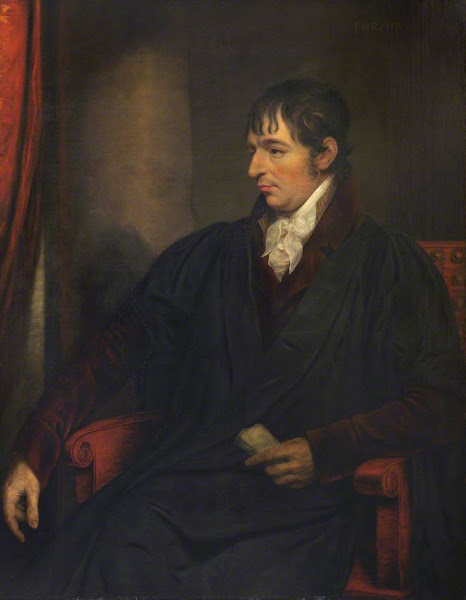
Richard Porson's Powers of Memory
Recollections of the Table-Talk of Samuel Rogers. To which is Added Porsoniana (New York: D. Appleton and Company, 1856), p. 296:
Newer› ‹Older
Porson declared that he learned nothing while a schoolboy at Eton. "Before I went there," he said, "I could nearly repeat by heart all the books which we used to read in the schools."Id., pp. 302-303:
He thought the Decline and Fall beyond all comparison the greatest literary production of the eighteenth century, and was in the habit of repeating long passages from it.Id., pp. 305-306:
He insisted that all men are born with abilities nearly equal. "Any one;" he would say, "might become quite as good a critic as I am, if he would only take the trouble to make himself so. I have made myself what I am by intense labour: sometimes, in order to impress a thing upon my memory, I have read it a dozen times, and transcribed it six."*Id., p. 323:
* But he was certainly gifted by nature with most extraordinary powers of memory. Dr. Downie, of Aberdeen, told me that, during a visit to London, he heard Porson declare that he could repeat Smollett's Roderick Random from beginning to end:—and Mr. Richard Heber assured me that soon after the appearance of the Essay on Irish Bulls (the joint production of Edgeworth and his daughter), Porson used, when somewhat tipsy, to recite whole pages of it verbatim with great delight.—ED.
His favourite authors in Greek (as, I believe, every body knows) were the tragedians and Aristophanes; he had them almost by heart.


